

Amid Hormuz Tensions, India’s Energy Supply Chain Stays Afloat
The development comes at a time when global energy supply chains are under strain due to the ongoing conflict involving Iran, Israel, and the United States, with the strategically crucial Strait of Hormuz witnessing heightened security risks and partial blockade conditions. A day earlier, LPG carrier Nanda Devi docked at Vadinar Port, transporting 46,500 metric tonnes of liquefied petroleum gas after navigating the volatile Hormuz passage. Another LPG vessel, Shivalik, had reached Mundra Port earlier this week, underlining the continued flow—albeit strained—of essential energy supplies into India. According to Adani Ports, which operates Mundra Port, the crude aboard Jag Laadki was sourced from the United Arab Emirates and loaded at Fujairah Port—a critical global oil storage and bunkering hub that has recently faced drone and missile attacks amid the conflict. The tanker itself is a massive vessel, measuring over 274 metres in length, with a deadweight tonnage of approximately 164,716 tonnes. Its successful berthing highlights the operational resilience and strategic importance of Mundra Port in safeguarding India’s energy lifelines during periods of geopolitical instability. India remains heavily dependent on imports, sourcing nearly 88% of its crude oil, 50% of its natural gas, and around 60% of its LPG requirements from overseas markets. Prior to the escalation on February 28, more than half of India’s crude imports—and a significant share of gas and LPG—originated from Middle Eastern suppliers such as Saudi Arabia and the UAE. The safe arrival of these vessels signals both the fragility and resilience of global energy logistics, as India navigates a complex geopolitical landscape to secure its essential fuel needs.#WATCH || 𝐓𝐡𝐞 𝐈𝐧𝐝𝐢𝐚𝐧-𝐟𝐥𝐚𝐠𝐠𝐞𝐝 𝐜𝐫𝐮𝐝𝐞 𝐨𝐢𝐥 𝐭𝐚𝐧𝐤𝐞𝐫 '𝐉𝐚𝐠 𝐋𝐚𝐚𝐝𝐤𝐢' 𝐚𝐫𝐫𝐢𝐯𝐞𝐝 𝐚𝐭 𝐀𝐝𝐚𝐧𝐢 𝐏𝐨𝐫𝐭𝐬 𝐌𝐮𝐧𝐝𝐫𝐚 𝐢𝐧 𝐆𝐮𝐣𝐚𝐫𝐚𝐭.
— All India Radio News (@airnewsalerts) March 18, 2026
It carried approximately 80,886 metric tonnes (MT) of crude oil, sourced from the UAE, and loaded at… pic.twitter.com/zatgihaweZ
Related News
 OCT 18, 2026
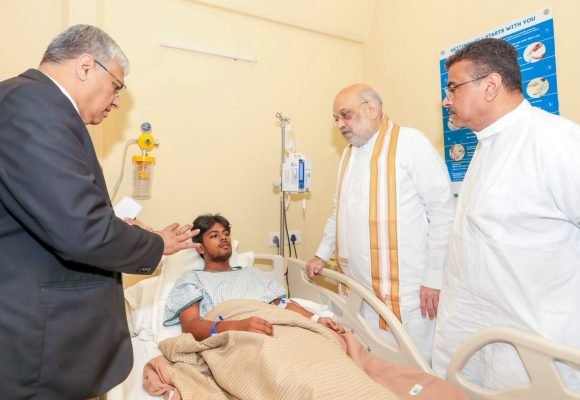
Amit Shah and Suvendu Adhikari Visit Hospital to Meet Kolkata Stampede Victims
Union Home Minister Amit Shah and West Bengal Chief Minister Suvendu Adhikari visited a Kolkata hospital to meet stampede victims and assured the injured of the best possible medical care and necessary assistance.
 OCT 18, 2026
Rubio Clarifies US Position on Starshield for Ukraine
US Secretary of State Marco Rubio says the possible use of Starshield by Ukraine remains under discussion, distinguishing the military satellite system from SpaceX's commercial Starlink service.
 OCT 18, 2026
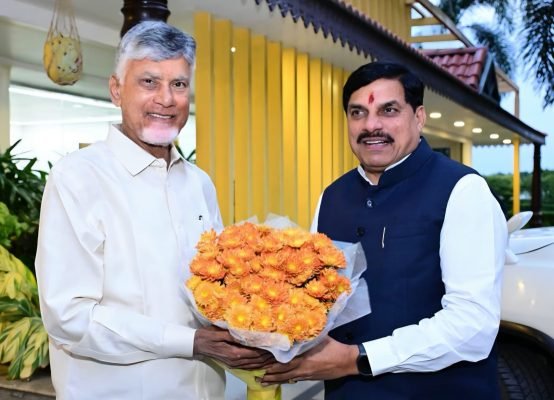
Mohan Yadav Meets Chandrababu Naidu, Reviews Amaravati Development
Madhya Pradesh Chief Minister Mohan Yadav met Andhra Pradesh Chief Minister N. Chandrababu Naidu to learn about development initiatives, including Amaravati’s construction. Nara Lokesh also presented him with a book on the Yuvagalam Padayatra.
 OCT 18, 2026
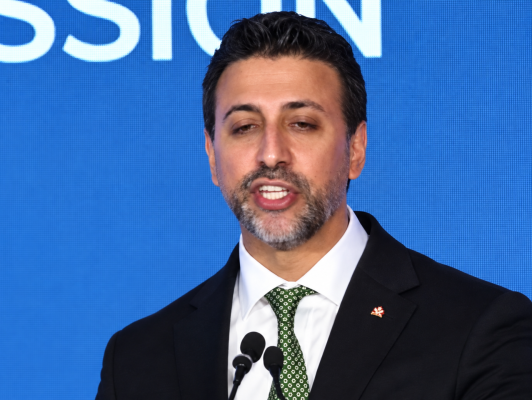
Canada Eyes Long-Term Trade Partnerships with India
Canada’s Trade Minister Maninder Sidhu has highlighted a $2.6 billion uranium supply agreement between Cameco and India while seeking stronger long-term business partnerships during the Team Canada Trade Mission reception in Mumbai.
Comments (0)