

Supreme Court NEET Protest Investigation: Court Seeks Neutral Probe, Orders Protection for Juvenile Protesters
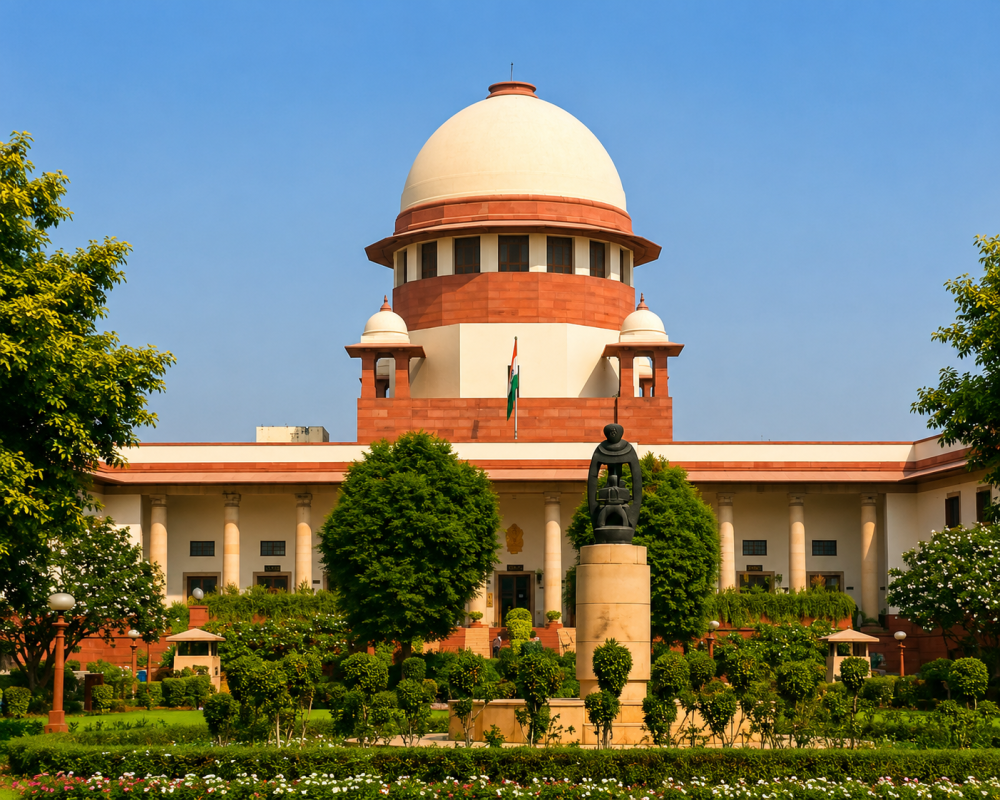
Supreme Court NEET Protest Investigation took a significant turn as the apex court called for a transparent and independent inquiry into allegations of excessive police force during nationwide protests over the NEET examination controversy. The Court also directed authorities not to adopt any repressive measures against protesters and emphasized that juveniles with no prior criminal record should not remain in detention.
The interim observations came during the hearing of petitions alleging police excesses during the NEET protests that took place across several states. The Bench stressed that accountability and a fair investigation are essential to uphold the rule of law while protecting the constitutional rights of citizens.
Supreme Court Calls for Independent Investigation
A Bench comprising Chief Justice Surya Kant, Justice Joymalya Bagchi, and Justice J.V. Mohan observed that any investigation into the NEET protest incidents would be meaningless unless responsibility is clearly fixed.
The Court noted that every individual who crossed legal boundaries, irrespective of their identity or affiliation, must be dealt with strictly in accordance with the law. At the same time, the investigation itself must remain transparent, impartial, and free from external influence.
According to the Bench, identifying those responsible is crucial to ensuring justice for all parties involved.
Relief for Juvenile Protesters
One of the key interim directions issued during the Supreme Court NEET Protest Investigation concerns juvenile protesters.
The Court observed that minors who have no prior criminal history should not continue to remain in custody merely because they participated in demonstrations. Authorities were directed to ensure that such juveniles are released and that no unnecessary coercive action is taken against peaceful protesters.
The Bench emphasized that law enforcement agencies must act proportionately while dealing with public demonstrations and avoid excessive restrictions on individuals exercising their democratic rights.
Court Questions Alleged Police Excesses
The Supreme Court also questioned why an independent inquiry had not yet been initiated into allegations of excessive police force during the NEET protests.
Several petitions before the Court alleged that protesters in different parts of the country were subjected to disproportionate police action. Taking note of these submissions, the Bench observed that a detailed investigation was necessary to establish the facts.
The Court clarified that the objective of such an inquiry would be to determine responsibility without prejudice and to ensure accountability wherever violations of law are established.
Direction to Preserve Digital Evidence
As part of the Supreme Court NEET Protest Investigation, the Bench directed authorities to preserve all available evidence related to the protests.
The Court ordered that the following materials should be securely maintained:
CCTV Footage
Authorities have been directed to preserve CCTV recordings from locations where protest-related incidents occurred.
Drone Recordings
Any drone footage collected during crowd management or surveillance operations must also be retained for the investigation.
Body Camera Data
The Court instructed police departments to preserve all body-camera recordings captured by law enforcement personnel during the protests.
The preservation of digital evidence, the Bench observed, is essential for conducting a credible and impartial investigation.
Privacy of Student Protesters
The Supreme Court further directed that the identities and personal details of student protesters must not be disclosed publicly without legal justification.
The Bench stressed that protecting the privacy of students is an important aspect of ensuring fairness during the investigative process and preventing unnecessary social or legal consequences.
Possibility of SIT Under Retired Supreme Court Judge
During the hearing, the Court indicated that a Special Investigation Team (SIT) headed by a retired Supreme Court judge could be considered to investigate the allegations if required.
The Bench noted that an independent mechanism may inspire greater public confidence and ensure that the inquiry remains free from bias.
Notices Issued to Centre and States
The Supreme Court has sought responses from the Union Government and several state governments regarding the allegations raised in the petitions.
Notices have been issued to:
Government of India
Assam
Bihar
West Bengal
Uttar Pradesh
Madhya Pradesh
Maharashtra
Kerala
The governments have been asked to explain the steps taken in connection with the alleged incidents and respond to the issues raised before the Court.
Why the Order Matters
The Supreme Court NEET Protest Investigation marks an important judicial intervention in balancing public order with constitutional freedoms.
By directing authorities to avoid unnecessary coercive action against protesters, safeguarding juvenile rights, preserving digital evidence, and considering an independent investigation, the Court has underlined the importance of transparency and accountability in handling public protests.
The matter is expected to return before the Supreme Court after the Centre and the concerned states file their responses. The outcome could have significant implications for future guidelines governing police action during large-scale public demonstrations.
Related News
 OCT 18, 2026
Kolkata Durga Puja Stampede: 19 Dead, 25 Injured
West Bengal Chief Minister Suvendu Adhikari confirmed 17 deaths and 25 injuries following a stampede-like incident at Kolkata's Chorbagan Sarbojanin Durga Puja pandal and announced an investigation into the tragedy.
 OCT 18, 2026
Sports Intelligence: A Decade-Long Dream to Transform India’s Sporting Future
After nearly a decade of pursuit, Kaushik Moulik takes a significant step towards transforming India’s sporting future through Sports Intelligence, combining human expertise, technology, real-time match data and behavioural analysis to identify promising football talent through the Gujarat State Football Association and Gujarat Super League.
 OCT 17, 2026
Raj Babbar Remembers Smita Patil on Her Birth Anniversary
Raj Babbar paid an emotional tribute to Smita Patil on her birth anniversary, remembering her extraordinary acting talent, warmth and enduring legacy in Indian cinema
 OCT 17, 2026
Sandipon Garg bail granted in Zubeen case; release formalities pending
The Gauhati High Court granted bail to the suspended police officer on October 16. Release formalities remained pending, his lawyer said.