

Why Elon Musk is building ‘Tera-fab’: A mega chip factory to fuel his AI ambitions
Elon Musk has announced plans to build a massive semiconductor manufacturing facility, dubbed the “Tera-fab,” in the United States to produce in-house chips for powering AI, robotics, autonomous driving, and space-based computing across his companies, including Tesla, SpaceX, and xAI. The facility will be located near Tesla’s Austin headquarters and is expected to be jointly operated by Tesla and SpaceX. Designed as an advanced fabrication unit, it will be capable of manufacturing and testing a wide range of chips, with a long-term goal of generating up to a terawatt of computing power annually.
Musk’s move comes amid growing concerns over chip shortages and the slow pace of semiconductor supply, especially as demand surges for AI and autonomous technologies. While Tesla currently relies on partners like TSMC, Micron, and Samsung, Musk believes building an in-house facility is essential to meet future needs. The Tera-fab is expected to produce cutting-edge 2-nanometre chips, including edge and inference chips for applications like robotaxis and humanoid robots, as well as high-performance chips for orbital data centres.
A key part of Musk’s vision involves creating a network of orbital data centres, starting with smaller AI-powered satellites capable of delivering 100 kilowatts of computing power, eventually scaling to megawatt levels. These space-based systems are intended to support xAI’s growing computational demands. Musk has even proposed launching up to one million data centre satellites, though the plan has faced opposition and regulatory hurdles. While the ambitious project aligns with industry trends, questions remain about execution, given the massive investment and technological complexity required.
Related News
 OCT 11, 2026
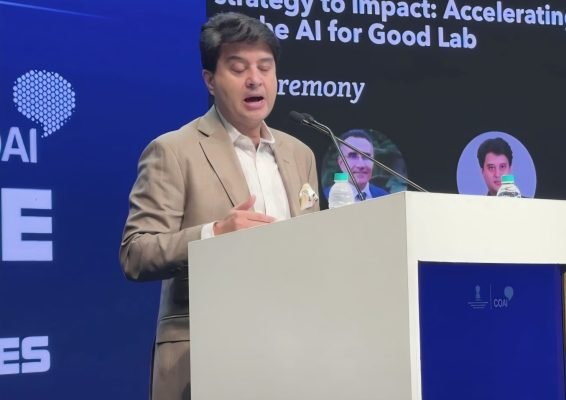
IMC 2026: Scindia Highlights India’s AI Leadership
At IMC 2026, Union Communications Minister Jyotiraditya M. Scindia highlighted India’s role in shaping the future of AI through AI-native networks, the Bharat 6G Alliance, AI for Good and trustworthy Digital Public Infrastructure.
 OCT 9, 2026
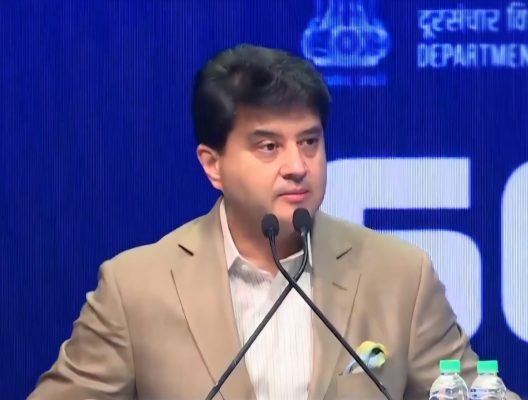
Scindia Says India Won’t Allow SATCOM Monopoly
Union Minister Jyotiraditya Scindia says India will not allow a monopoly in satellite communications. Reliance Jio, OneWeb and Starlink have licences, while Amazon Project Kuiper is interested in entering the market.
 OCT 9, 2026
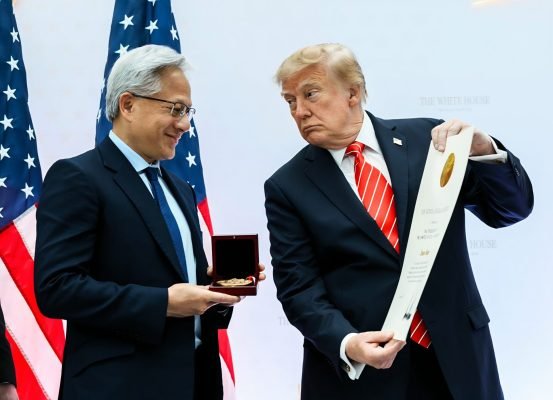
Trump Presents National Medal of Science to NVIDIA CEO Jensen Huang
US President Donald Trump presents the National Medal of Science to NVIDIA CEO Jensen Huang, recognising his contributions to AI, GPU computing, supercomputing and semiconductor innovation.
 OCT 9, 2026
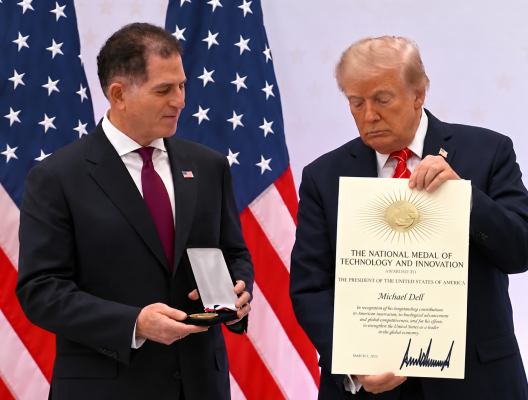
Trump Praises Michael Dell for Transforming Personal Computing
President Donald Trump has praised Michael Dell for transforming a $1,000 idea developed in his University of Texas dorm room into a revolution in personal computing.
Comments (0)