

Dutch Minister Sjoerd Sjoerdsma Hopes India-EU FTA Will Be Implemented by Spring 2027
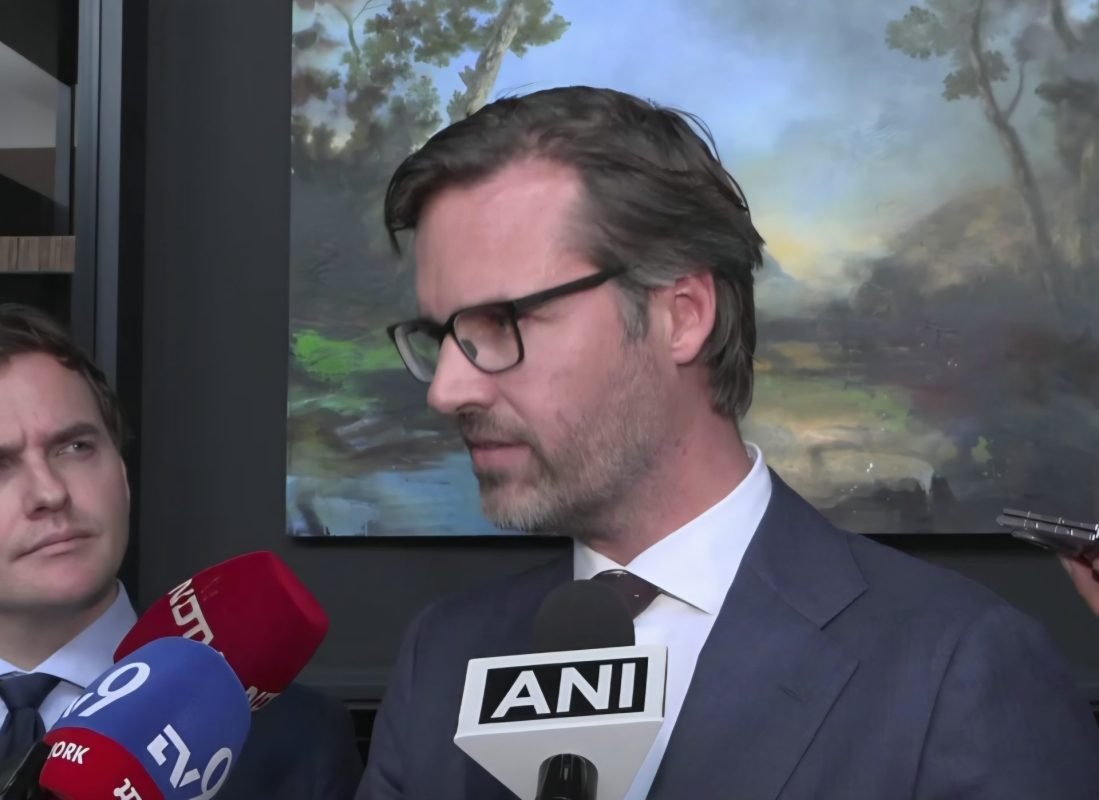
The India-European Union Free Trade Agreement (FTA) could be implemented as early as spring 2027, according to Sjoerd Sjoerdsma, the Netherlands’ Minister of Foreign Trade and Development Cooperation. He said the Netherlands and the European Union are keen to complete the process as soon as possible following the conclusion of negotiations.
Speaking about the agreement, Sjoerdsma said the India-EU FTA was a unique and far-reaching trade deal negotiated in almost record time. However, he emphasised that the agreement still needs to be formally signed before implementation can proceed.
“The Netherlands and the EU are very ambitious to get this done as soon as possible,” Sjoerdsma said, expressing hope that the agreement would be signed in December and implemented shortly afterwards.
Signing and Implementation Timeline
Sjoerdsma indicated that December was the hoped-for timeframe for signing the agreement, while acknowledging that implementation would require additional time.
“We hope that this will be signed in December, and we hope that implementation will follow as soon as possible, preferably the next day,” he said.
The Dutch minister cautioned that the precise date remained uncertain, noting that the process involves steps beyond the signing itself. He expressed hope that the agreement could become operational in spring 2027.
His remarks underline the importance the Netherlands and the wider European Union attach to bringing the trade agreement into effect, although the proposed timeline remains an expectation rather than a confirmed implementation date.
Significance of the India-EU Trade Agreement
The proposed FTA is intended to strengthen economic ties between India and the European Union by expanding trade and investment opportunities. Once implemented, it could provide businesses on both sides with improved access to markets and support closer commercial cooperation.
For India, the agreement could create additional opportunities for exporters and manufacturers seeking to expand their presence in European markets. European businesses could also benefit from greater opportunities in the Indian market.
The agreement is expected to be significant for sectors seeking stronger supply-chain connections, expanded market access and deeper economic engagement between the two economies.
Related News
 OCT 27, 2026
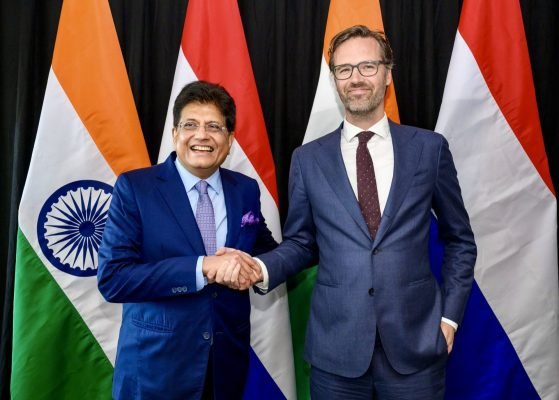
Piyush Goyal and Dutch Minister Sjoerd Sjoerdsma Discuss Trade, Investment and Clean Energy Cooperation
Union Minister Piyush Goyal and Dutch Minister Sjoerd Sjoerdsma discussed expanding bilateral trade, boosting Dutch investment in India and strengthening cooperation in semiconductors, green hydrogen, renewable energy and digital technologies.
 OCT 27, 2026
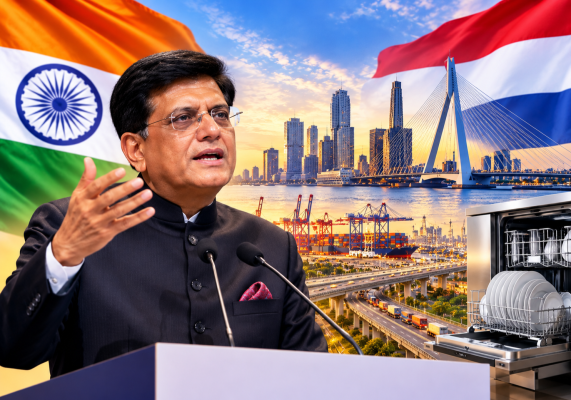
Piyush Goyal Sees Huge Opportunity in India-Dutch Trade
Union Minister Piyush Goyal has highlighted India's vast business opportunities for Dutch companies, predicting that India could sell more dishwashers in five years than the rest of the world combined. He also cited $130 billion in annual government infrastructure investment.
 OCT 27, 2026
Harry Kane Crowned 2026 Men's Ballon d'Or Winner at Landmark London Ceremony
Harry Kane has been named the 2026 Men's Ballon d'Or winner after a phenomenal season for Bayern Munich and England, becoming the first Englishman in 25 years to claim football's most prestigious individual award.
 OCT 27, 2026
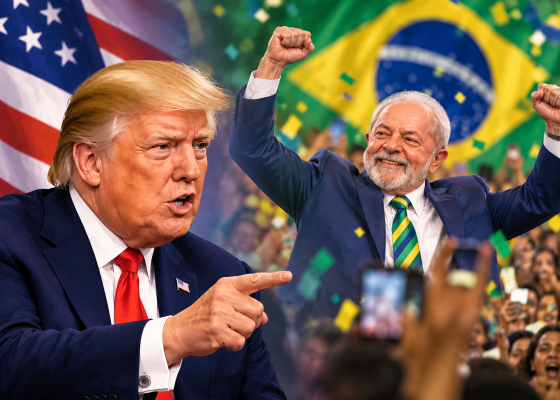
Donald Trump Questions Brazil Election Process While Expressing Good Ties With Lula
US President Donald Trump has questioned the tabulation process in Brazil’s presidential election, describing the extension granted as “very strange” while emphasising his good relationship with President Lula.