

MA Baby Backs Supreme Court Intervention Over Delhi Protest Curbs
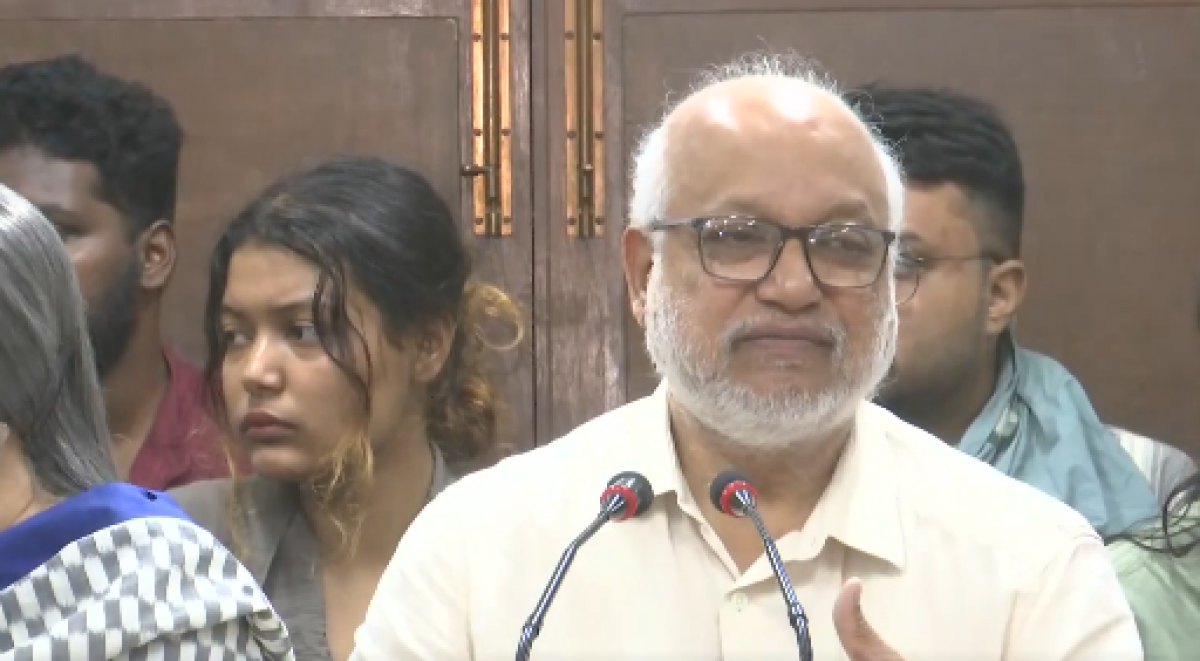
MA Baby Supreme Court Delhi protests remarks highlighted the CPI(M)’s decision to combine public mobilisation with legal action against restrictions imposed during demonstrations in the national capital.
Speaking in Delhi, CPI(M) General Secretary MA Baby said the party intended to involve students, youth, women, workers, peasants, civil society groups and public intellectuals in protests while also pursuing remedies before the courts.
#WATCH | Delhi | CPI(M) General Secretary MA Baby says, "I have decided to take it up very seriously by mobilising people and supporting every section of students, youth, women, workers, peasants, civil society, and public intellectuals... Along with this struggle in the streets, in educational institutions, and in universities, we also wanted to undertake legal action. CPI(M) was the first political party to go to the Supreme Court, bringing to the attention of the Supreme Court that Delhi has been transformed into a war zone... We appreciate the Supreme Court for having pointed out that because of some dissent and protest, the executive should not close down the entire city of Delhi. They also stated that the internet should be restored and that only reasonable restrictions can be imposed."
— ANI (@ANI) October 12, 2026
MA Baby Says CPI(M) Will Mobilise Across Sections
Baby said:
“I have decided to take it up very seriously by mobilising people and supporting every section of students, youth, women, workers, peasants, civil society, and public intellectuals.”
He said the political and legal challenge would continue not only on the streets but also in educational institutions and universities.
CPI(M) Moved Supreme Court Over Delhi Restrictions
Baby said the CPI(M) was among the first political parties to approach the Supreme Court over restrictions imposed in Delhi during the recent protests.
A Supreme Court order dated October 9 records M A Baby as a petitioner in proceedings concerning the shutdown or restriction of Metro and railway services amid planned protests. The bench examined orders that affected Metro operations and train services in the capital.
Supreme Court Questions Sweeping Curbs
The Supreme Court questioned whether sweeping restrictions imposed in anticipation of protests were proportionate, stressing that authorities should not inconvenience an entire city merely because demonstrations were expected. The court directed the government to avoid a complete shutdown of public transport and apply restrictions proportionately.
Baby welcomed the intervention and said the court had recognised that dissent and protest could not justify shutting down normal life across Delhi.
Metro and Internet Services Restored
Subsequent Supreme Court directions required authorities to restore normal Metro operations and internet services while allowing only restrictions justified by genuine law-and-order requirements. The court also said peaceful protesters should not face unlawful detention.
By Sunday, Metro operations had largely resumed and internet restrictions were lifted in Delhi, although prohibitory orders and some detentions continued in central parts of the city.
Baby Says Legal Battle Will Continue
Baby said the CPI(M) viewed judicial action as an important part of its wider campaign.
He argued that demonstrations, student mobilisation and political activity should be accompanied by legal challenges whenever authorities impose restrictions that the party considers excessive.
The MA Baby Supreme Court Delhi protests remarks therefore underline a two-pronged strategy — continuing public demonstrations while simultaneously seeking judicial scrutiny of government restrictions.
Related News
 OCT 12, 2026
Devendra Fadnavis Backs CJI Over INDIA Bloc Meeting Rejection
Maharashtra CM Devendra Fadnavis backed CJI Surya Kant’s decision to decline an INDIA bloc meeting request, saying grievances should be pursued through the courts.
 OCT 12, 2026
INS Mangrol Strengthens India’s Anti-Submarine Warfare Capability
INS Mangrol strengthens the Indian Navy’s anti-submarine warfare capabilities, with Commander U. Sharan Kumar highlighting growing underwater threats in the Indian Ocean Region.
 OCT 12, 2026
Jacqueline Fernandez Stuns in Dreamy Floral Saree With Timeless Elegance
Jacqueline Fernandez looks breathtaking in a dreamy pastel floral saree, combining delicate lace detailing, statement earrings and effortless confidence in her latest glamorous pictures.
 OCT 12, 2026
Atar Singh Bhadana Killing: Congress MLA Questions Police Inaction
Congress MLA Harimohan Sharma questioned the police response after former BJP MLA Atar Singh Bhadana was killed during a clash linked to a mining dispute in Bharatpur.