

India comfortable on oil supplies amid West Asia crisis; reserves can last 6–8 weeks.
ndia currently has crude oil and fuel stocks sufficient for six to eight weeks, putting the country in a “reasonably comfortable” position despite the ongoing military conflict in West Asia, a senior official from the Ministry of Petroleum and Natural Gas said.
The conflict escalated after Israel and the US launched strikes on Iran, prompting Tehran to retaliate by targeting countries hosting American military assets. The tensions have disrupted shipping through the Strait of Hormuz, a crucial route through which a large share of India’s oil and gas imports pass.
India imports around 2.5–2.7 million barrels of crude oil per day through the Strait, mainly from Iraq, Saudi Arabia, the UAE, and Kuwait. The country imports over 88% of its crude oil needs, making West Asia a key supplier.
Officials said Indian refiners currently hold about 25 days of crude oil inventory, including oil stored in tanks, pipelines, and shipments already in transit. India’s strategic petroleum reserves add roughly another week of supply, while stocks of key fuels such as petrol, diesel, and LPG can meet about 25 days of domestic demand.
The government is closely monitoring the situation and has set up a 24×7 control room to track fuel supply and stock levels across the country.
While crude oil supplies are considered manageable, LNG and LPG remain more vulnerable because India does not maintain large reserves of these fuels. The situation has become more sensitive after Qatar—India’s largest LNG supplier—temporarily halted production following attacks on some facilities.
Officials said India is exploring alternative supply sources, including Russia, the US, West Africa, and Latin America, while companies are also looking to secure additional LNG and LPG cargoes from non-Gulf suppliers.
Experts believe India can manage short-term supply disruptions, but the overall impact will depend on how long the Strait of Hormuz disruption lasts. If the crisis continues, the country may face higher energy prices, even if supply shortages are avoided.
Related News
 OCT 14, 2026
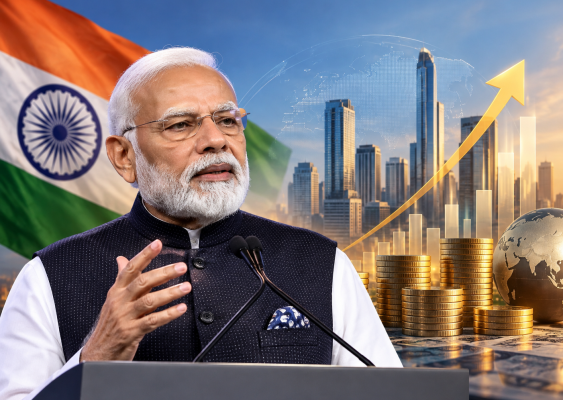
PM Modi Highlights India’s $700 Billion Forex Reserves
PM Narendra Modi highlights India’s $700 billion forex reserves, banking strength, GST reforms and measures to improve the ease of doing business.
 OCT 13, 2026
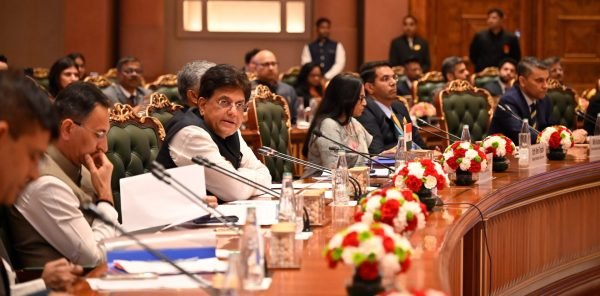
India-UK CETA Opens New Business and Investment Opportunities
The India-UK Comprehensive Economic and Trade Agreement (CETA) has been highlighted as a significant milestone in strengthening economic ties between India and the United Kingdom. Addressing the Joint Economic and Trade Committee (JETCO) Business Plenary alongside UK Business and Trade Secretary Jonathan Reynolds, the Indian representative emphasised opportunities for businesses in both countries to expand collaboration, deepen investments and build new partnerships.
 OCT 11, 2026
IMC 2026: Scindia Highlights India’s AI Leadership
At IMC 2026, Union Communications Minister Jyotiraditya M. Scindia highlighted India’s role in shaping the future of AI through AI-native networks, the Bharat 6G Alliance, AI for Good and trustworthy Digital Public Infrastructure.
 OCT 9, 2026
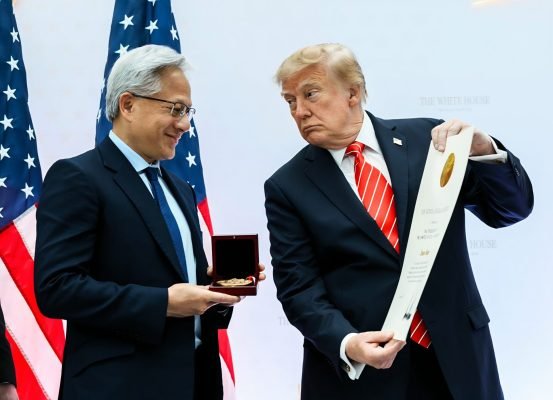
Trump Presents National Medal of Science to NVIDIA CEO Jensen Huang
US President Donald Trump presents the National Medal of Science to NVIDIA CEO Jensen Huang, recognising his contributions to AI, GPU computing, supercomputing and semiconductor innovation.
Comments (0)